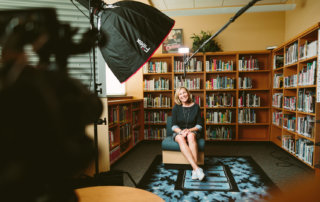
Cinematography
CINEMATOGRAPHY. This is the word that turned my crank a number of years. Today’s
Cinematographer often works in both video and film. Not only does the professional have to know the technical aspects of film and video cameras but also the art of “painting with light”. I think that’s where most of us get our jollies. Being able to light a scene and set a mood but make it look like I didn’t do anything gives me a real kick.
I remember reading an article on the the television series “Law and Order”. A compliment from a fellow cinematographer was passed on to the DOP (Director of Photography) of that show that went like this “What I really like about your work is that you don’t light it”.
The DOP whom I believe was Constantine Makris, works very hard with all his lights to achieve the natural look and I am sure he appreciated that comment.
THE MASTERS
You can learn a lot about composition and light by studying the great painters. Look at the cinematography work of James Wong How and you will see how great black and white can look. Look at anything by Connie Hall ASC or Allan Daviau ASC or (The Prince of Darkness) Gordon Willis ASC, and you can get an idea of how great the art form can be.
Remember, many of the films these people shot did not have monitors on set. They were paid hansom salaries because of their ability to see with there eyes. This is something I am afraid is being lost to knew filmmakers. Often the monitor becomes god on the set, slows things down (cause we all have to look) and can cost the production company more money.
LIGHT METERS FOR VIDEO:
Not all videographers use light meters when shooting video. If you can afford to pack around a monitor along with a waveform monitor and possibly a Vectorscope you can certainly get quality images.
Figuring out the ASA or ISO sensitivity of your video camera compared to a film camera
and using your light meter as you would in film can deliver excellent results with less equipment to pack.. This is the method I have used for years. The principle is one of many I like to turn students onto in our program.
Recommended readings:
“Matters of Light and Depth” by Ross Lowell
Broad Street Books, Philadelphia
P.O. Box 4107 Philadelphia PA 19127
ISBN 1-879174-03-0
“Cinematography” by Kris Malkiewicz (second edition)
a fireside book published by Simon & Schuster
ISBN 0-671-76220-6
“Lighting for Location Motion Pictures” by Alan J. Ritsko
Published b Van Nostrand Reinhold Company Inc.
ISBN O-442-26957-9
“Set Lighting Techniques” by Harry C. Box
published by Focal Press /Butterworth-Heinemann
a division of Reed Publishing U.S.A.
Words of wisdom:
One of the exercises I sometimes had students do is to spend time in various locations such as a supermarket, a restaurant, library, etc. and study the light. You can learn a lot from this exercise in terms of how you would create a similar look if you were asked to as the Cinematographer on a shoot.
You have heard the term “The world is your oyster”, well in our case the world is our set. One final thing, remember, “There’s lots of room at the top, it’s the bottom that’s crowded!