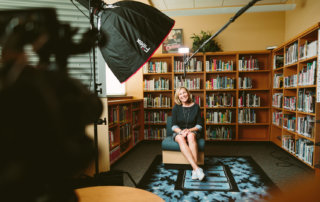
Good Lighting – the best clear skin face cream for dating site photos.

General interest | Monday August 23 2010 10:48 pm | Comments (0)

Oh boy!! There are some real photographic problems here.  Whether it’s single women looking to date guys or men seeking women, you need to look your best in that on line photo.

If you are one of those people who doesn’t want to post their photo on a dating site, then this won’t apply to you.  But if you like to post your photo in hopes of getting the opposite sex to notice you then here are a few image tips. 

Don’t just grab an old or even recent photo unless it clearly presents you looking great with a nice smile.  A photo of you with your three sisters on a beach in Mexico when you are a hundred yards from the camera is not worth even considering for a dating site.  Sorry ladies but the guys want to see what you look like and have little interest in the beach, your dog or a bunch of flowers.

In looking over a few of these sites I notice some very common image problems with both men and women. Firstly, if you are going to take your own photo, make sure you don’t use a wide angle lens. This applys to whether you use a hand held camera or the one built into your computer. The closer you get to this type of lens, the more distorted your features  will look,  and you’ll get too much background for a mug shot on a dating site.

I have a separate HD camera that is attached to my computer that has a zoom feature built in, allowing me to look more portraiture like on the screen.  These computer cameras are not expensive but superior to the kind that come  built into your computer.

Now ladies, this is especially important for you more so than the guys.  You want to be seen in your best light, so here are some tips that will help you look your best.  I’m going to stay totally away from makeup in this article, cause you women know more about anti aging face creams and makeup for covering acne scars or dealing with derm issues, than do us guys.

Don’t use a light that is positioned at the side of your face as this type of lighting will accentuate texture.  If you have any wrinkles or blemishes, this is the worst lighting position for you.  If you sit in front of a mirror and place a small light source on your right or left side, you will see what I mean.

Try to have a (big source of light) and one that is more or less in front of you, but just a bit to one side.  A good example here would be the light created by a large window on an overcast day.  Simply put, the bigger the light source, the softer the light and the better you will look. You might want to stay away from direct sunlight here which is a large source but a very hard light.

If your shot is going to be taken outside on a sunny day.  Use the Sun as a backlight, that is, have the Sun coming from behind you when it is a bit lower in the sky.  This way you will have a very attractive hair light from the Sun and you won’t be squinting. The light on your face will be diffused and very soft.  If you can position yourself against a dark background in a shot like this, you will have great contrast in your frame. (Take a look at girl in the video on my front page of this site and you will see a good example of the type of lighting I am talking about here.)

Watch for colour problems if you use fluorescent lights. These type of lights come in all different wave lengths and can make your flesh tone appear green or bluish.  The new “full spectrum” versions are ok because they appear like natural daylight.  Most fluorescent lights are mounted in the ceiling and though they give a soft light, it is not very flattering because it comes straight down and creates dark shadows under the eyes.

The background is also very important. If you have a good complexion and a bit of a tan, then a blue or green background will enhance your tan somewhat and add contrast to your shot, making your photo stand out from all the other bad shots on dating sites.  Remember this… “Amber and blue are good for you.”

Use the “Clean frame technique”.  Make sure that there are not a lot of objects in the frame behind you that could draw the eye away from you. Why have your potential date looking around the background, unless it says what you want it to say about you.

Another tip which you see in many well done portrait type  photos is to have your body positioned at right angles  from the camera but be looking over your shoulder at the camera.  This kind of shot adds a bit of class to your picture.

I guess I don’t have to tell you to stay away from busy patterns with regard to shirts and blouses.  All they will do is fight your good looks for attention.

So let’s just revue a few points.

*Don’t just pick an old shot
*Use a lens that allows you to zoom in.
*Stay away from overhead lighting
*Light from the front, not the sides
*Use a big source to light yourself
*Use the Sun as a backlight, you won’t be squinting
*Blue is a great background colour
*Keep the background simple
*Plain colours for shirts and blouses

Feel free to pass this article on to your friends. All I ask is that you give me the credit for the article and tell them to have a look around my website at
www.barrycasson.com

Hope this is of some help.  Have to go now.  I’m late for my facial.

Cheers, Barry

The changing face of communication

General interest | Thursday August 5 2010 9:04 pm | Comments (0)

I got an e-mail the other from a young guy inquiring about some drum lessons.  I had an on line add offering my services to teach. (I have been playing drums for years).

It got me to thinking how not that long ago, this inquiry would have been a phone call.  We would both have a least got a feeling about the personality of whom we were talking with.  It’s not that easy with e-mail. It makes me wonder if we aren’t losing something very important in our society.

When you are standing next to someone and having a conversation, many human faculties are interacting. You take in information with your eyes, with your ears, your intellect and possibly the use of touch.  All of this gives each of insight into that other person and helps us to form an opinion of who they are.

Now we are not all born with the ability to interact well with others. Some of us may be shy or reserved and find it difficult to interact well when we are in conversation with others. I know people who hate to use the phone.

Now with e-mail, those who don’t have good communication skills will tend to see e-mail as an expressive form of communication without having to deal with emotions that might come up in a live one on one conversation.

Is this good or bad?

We could say this is good as it helps people who don’ have good personal one on one skills.  Then again, it certainly doesn’t help these individuals develop their one on one communications skills.  Through e-mail they can purposely avoid eye, voice and touch contact and for that matter not have to deal with any emotions that might come up through these senses.

In the long run, is this internet version of human interaction good or bad for the human psyche? Maybe like me you have run into problems reading what someone said in an e-mail and taken it the wrong way.  Would this not have happened if it were a personal meeting or even a phone conversation?

You may ask why I am so curious about this?  Well like I said in the beginning, I play drums and that was one of the first sources of primary communication.  I’m thinking it would be great if we each had a set of drums on our back porch and could send each other D-mails.  (chik aboom rrrrr… cadang…splash).  That’s drum talk for I’m off-line now.


Cheers, Barry

So you want to be a film director.

General interest | Thursday July 15 2010 10:20 pm | Comments (0)

First let,s look at a few qualities of a director

We could say that a director has to have great communication skills.  We could also say that he or she needs the power to be able to manipulate actors and crew into doing his or her bidding.  Good directors are students of human nature. A Director should have lots of confidence in what they are doing.  This can become inspiring to the rest of the crew and talent.  Some film directors get the job done and everyone on set hates them, but they get hired again because they got the job done.  Some directors can get along great with the crew but don’t get hired again by the producer because the film was a dud. Let’s not forget the bottom line to the producer is whether the film made money or not.

As in any business your previous track record of successful productions is what you get hired for.  Hitchcock, John Ford, Roman Palanski, Spielberg, Oliver North etc., all great directors with great track records.

The pathway to becoming a great film director is not an easy one.  You must keep proving yourself one film at a time.  Winning lots of festival awards helps along the way in the beginning.  By the way, I’ve won my share of film awards both national and international and I can tell you that the more you enter festivals the greater your chances of winning a few awards.  All you need is one simple award, not a gold or silver or even a bronze, but just an honourable mention award.  Now you can honestly say you are an award winning filmmaker.

My advise to new film directors is to study not only the films by great directors but also books written by directors.  One book that I found with lot’s of depth into the character of a director was “An open Book” by John Houston.  As I recall there was a Clint Eastwood film about hunting liions in Africa that was a parady on John Houston’s life.

Here is one great tip I learned while studying film in Hollywood some years back and one that I have used several times on set.  It is simply this.  Every director on a film will come to a point where exhaustion and fatique have taken their toll on mind and body.  The twelve to 16 hour days, day after day can be brutal.  Suddenly, you don’t know where to go next with your shots, ideas or anything??? blank.  When this happens you simply turn to you AD (assistant director) and tell them to give the crew a 15 minute coffee break while you and the AD discuss things.  Now the crew is happy for the break and you as the director will not look like have lost it, because if the crew senses that you have, you will lose their confidence in a hurry.  All they know is that the director had another meeting with his AD.

I’ve been speaking here about theatrical films, but please take this advise and apply it to any type of film and video production work.  You can learn a lot more along with some good production stories of what and what not to do, in my book  “The Video Bible”, also comes with a great bonus gift. A number of high schools and colleges are using it in there media classes so it is certainly a good invesment. just click on the link below to claim your copy.

  http://www.barrycasson.com/the-video-bible

I would really appreciate your feedback on my site, so drop me a line.

Cheers,  Barry

Where we’re going with Internet

General interest | Friday June 4 2010 8:55 pm | Comments (1)

This article by Mary Jander of Internet Evolution. June 2010

To many IT pros, the latest report from Cisco Systems Inc. (Nasdaq: CSCO) states the obvious: The Internet’s getting bigger. Even so — and even in light of Cisco’s vested interest in the growth of IP networks worldwide — the news contains some nuggets worth chewing on.

The basics from Cisco’s “Visual Networking Index,” conducted twice yearly, indicate that global Internet traffic will more than quadruple by 2014, reaching a volume of 767 exabytes, an order of magnitude increase over IP network traffic worldwide in 2008. (Compare these levels to the 300 exabytes projected for 2011 by IDC in 2007.)

According to Cisco, in 2014, the Internet will carry about 64 exabytes of global traffic monthly — equal to 16 billion DVDs; 21 trillion MP3s; or 399 quadrillion text messages.

Video will account for the lion’s share of consumer Internet traffic, representing more than 91 percent of it by 2014, thanks to the predicted rise of HDTV and 3DTV.

What’s all this got to do with enterprise networks? Plenty, says Cisco. Even though from 2009 through 2014 the ratio of consumer to business traffic will increase, business traffic will also increase on its own, more than tripling to an estimated 7.7 exabytes a month, Cisco says — the equivalent of 5 billion DVDs. Interestingly, this level of business IP traffic will represent just about 13 percent of all monthly traffic in 2014.

Like the consumer Internet, business traffic will also contain much more video content near-term, in Cisco’s view: Business video conferencing will grow tenfold from 2009-2014 (a compound annual growth rate of 57 percent), nearly three times the rate of growth compared to overall business IP traffic. And within the business video conferencing segment, Web-based video conferencing will show a CAGR of 183 percent from 2009-2014.


Social Media stats from this past month

Uncategorized | Thursday May 13 2010 9:28 pm | Comments (0)

I caught this from Huffington Post May 2010.

*96% of millennials have joined a social network.

*Social media has overtaken porn a the number one activity on the web.

*1 out of 8 couples married in the US met via social media.

*The fastest growing segment on Facebook is females 55 to 65 years old.

It took radio 38 years, TV 13 years, the internet 4 years, and the IPod 3 years to reach 50 million users-while Facebook reportedly added 200 million users in under a year.

All this reminds that I used to read recipe books like science fiction magazines. When I got to the end of an article I would say to myself  “Well that’s not going to happen”.

Now I see that all the science fiction stuff I used to question is actually starting to happen all around me.?

I think I might start my own group of independant thinkers.  We’ll call it… “Back to Stone Knives and Bear Skins”.  Of course it would be nice to have a computer network to sign people up?  There ya go!! I’m beat before I start.

Looking for a real good book on how to improve you camcorder work?
Well, It’s right here on my site. Just click on the link below and learn lots more before you purchase. 

http://www.barrycasson.com/the-camcorder-ebook

PS

I have great presentation on Social Media Marketing using Video.  I offer this seminar to business groups and chambers around BC.  Click the link below to see some live video of my presentation and material I cover.

http://www.barrycasson.com/workshops-seminars

Cheers, Barry

Video on Your Website – what you can do.

Uncategorized | Monday April 26 2010 6:09 pm | Comments (0)

Ok,  so video is the big thing now.  Everyone has a nice HD camcorder that delivers great images.  So why not shoot something with this great quality and put in on our website?

A lot of  (would be filmmakers) think all you have to do is stick your talking head in front of the camera, tell everyone that comes to your site how great your product is and the orders will come flooding in —WRONG!!

Unless your name is Robin Williams. Bill Clinton or Martha Stewart nobody cares to look at your (what the news media calls) “a talking head”.

First you need to recognize that in this fast moving world, you have very little time to get your message out, before your audience gets bored and clicks away to another site.  The average length of a corporate or promotional video ( and I’ve done lots) a few years ago was 7 – 10 minutes. Today on the web the average video is around 3 minutes.  Your talking head just ain’t going to cut it.

Now you have to fill up 3 minutes (less is ok too) with some meaningful images that invoke an emotional response from the viewer.  So how can you do this with your hot little camera and your less than awesome knowledge about the production process?  Here are some thoughts.

First sit down and think about your product.  Ask yourself …Who would really benefit from seeing a video about my product?  This is your target market.

Then ask…  How can I show my product in its best light so that people will want to buy it?   Think of ways that your product can be used  in a dramatized situation.  By this I mean that you show your product solving a problem for anyone in your target market.

The key to making an add (especially a video add) that works, is to first visually set up the problem your client has, and then solve it successfully with your product, but do it in a way that makes the solution “amazing”.

We  have to remember here that you are not James Cameron or Stephen Spielberg and you’re not working on Gone with the Wind Two. You most likely don’t have any directing experience and you can’t afford to hire actors.

What you can do is write out a short scenario of your three minute production. In the biz we call this a “story board”.  It is simply single pane drawings of what your show will look like on video.  Anyone can do this and the more you work at it, the better the end product will be. Break everything down into shots that will be in your video. Each shot should be more informative than the previous shot and bring new information to the screen.

If your product is a really good vaccum cleaner that can suck a golf ball through a garden hose then can you demonstrate this?  Don’t try to fake anything that your product really can’t do.

You don’t need any actors.  Any good looking relative of yours dressed in the way you audience would be if they were using you product will do just fine. 

Get someone with a great voice to do what we call a (voice over) to cover the images you have shot.  You will of course have to write out the spoken word to fit the images, this is called  ”the narrrative”

Some of what I’ve said here may sound a bit over simplistic and I must say that in the production business you really have to think things through well to have a successful production, but if you make a stab at this and can get a hold of a good editor, you could have yourself a strong video that will do much more for sales than a lot of the useless talking heads the grace a lot of sites.

My book The Video Bible has tons more tips and techniques that can help you with the process.  Click the link below to learn more great production tips that are in my book.
http://www.barrycasson.com/the-video-bible

Cheers,Barry

Creating Social Media Videos for the Web.

Uncategorized | Saturday November 14 2009 9:08 pm | Comments (0)

In the last few years ther has been a tremendous explosion in video production.  Much of this due to ease of acquiring a simple video camera that has great resolution.

The amount of videos being created for use on the web is off the chart.  However there is a big problem with all this video due to the fact that many people are creating videos for marketing and business purposes and yet have little to no knowledge of how to create images that work.

I recently watched a video on the web with a woman pitching something and behind her was a cork board with countless photos of her family.  Any viewer would be drawn to this busy board looking at the photos and not really paying any attention to what she was selling.

Another video had three young girls sitting on a bench against a white wall. One of them was pitching something about how to be an entrepreneur All three looked quite shy and not comfortable on camera.  It seems to me that whatever they were selling wouldn’t get through to make anyone  buy the product.

There are some very simple rules to follow when creating any video to sell a product.  One of the big rules is to keep it short.

I recently did a talk to a chamber of commerce about creating videos for Social Media Marketing on the web.  In my talk, I showed them a successful seven minute video that I produced for a client.  I’m sure they all benefitted from seeing how much information you can pack in to seven minutes. I had to add however that these days the average video length on  the Web is down to three and a half minutes.

There are some really good video tutorials on this site that you can use when creating your next video. Check them out on the front page.

Cheers, Barry

How to Find a Good Video Producer

Production | Saturday May 23 2009 6:00 pm | Comments (1)

Some questions to ask

1. Does the producer have demo reel to show you his work?

Most reputable production houses will be able to show you examples of previous videos they have done along with any awards they have received. Ask to view the finished product and not just video sample clips. You want to know how it all came out and that it has professional quality.

2. Has the producer done videos for companies similar to yours?

Some producers may have expertise on one area but be unfamiliar with other areas. As an example you could wind up with a producer who can show you great snowboarding video samples but has never worked with actors and you want dramatized scenes in your video demonstrating your companies product. A solid producer will often have a variety of different projects to show you.

3. Does the production company have up-to-date equipment?

Video production equipment is changing all the time. This does not mean that some older equipment cannot deliver what you want. You have to know in advance if your video is only going to be used at trade fairs as well as presentations in a clients office. The kind of quality needed for these presentations is different than that needed for broadcast television. I recommend that the production camera should deliver at least 700 lines of horizontal resolution(this simply means clear, sharp images) and that micophones are industry standard.

4. Does the writer have corporate video writing skills.

Whether it’s theatrical feature films, made for TV movies or promotional videos, the script is everything. Make sure it works on paper before going ahead with any production work. Remember you are selling your product in your video and you want to motivate your clients to buy. A client telling you that he likes your video means nothing unless he is reaching for a pen to write you an order.

The script should emotionally move your audience because it is only through emotion that we buy anything. Often a good promotional video script will restate the important points a second time near the end of the video. Remember to have yourself and the producer initial the finished script. This will prevent any misundertandings later about what was being covered during shooting.

5. Does the producer and or writer ask questions about your business?

A good producer will not simply ask what do you want in the video. They will want to get to know your operation. They will spend time at their expense getting a feel for things. They will make suggestions that will show off and enhance your product in the video.

They should want you to be a long term client earning your confidence and delivering what they promise. This is a partnership arrangement where both you and the producer need to have a good working relationship. I have a stack of testimonial letters from previous clients that can instill confidence in any new clients working with me for the first time.

6. Thinking ahead for updates to your video!

It’s a good idea to plan ahead for possible changes to your video. For example your original script could have a modular approach featuring various aspects of your business. Later, as you add new equipment you could simply subtract the section with the old equipment in your video and add the newer machinery in its place. This means you don’t have to create a whole new video.

Make sure that your producer has mixed the music and effects in your
video onto a separate track, separate from any narration track. This way you only need to bring in the narrator to change the wording for the new section and then re-mix the new commentary into the music and effects of this section. This is a lot cheaper than having to re-mix a whole new video.

7. Will the production disrupt your business?

As a business owner you cannot simply shut down your operation while the video is being done. You need to know that the producer can work around your business day to day needs. Your staff may like the idea of being in a video until they are interupted at their jobs and can’t complete there daily tasks the same way as usual.

You producer needs to employ a lot of empathy for the staff. He needs to get his shots while demonstrating a caring attitude to your employees during the shoot. I can tell you from experience this is very important to the successful outcome.

8. How much should the video cost me?

This all depends on what is involved. For example a production with a lot of locations to shoot, that is of dramatic content involving actors will cost more than one with fewer locations and no actors involved. I have produced shows from $800 per finished minute to $2,500 per finished minute. Many locations can drive up the costs due to down time while moving equipment and crew. You simply loose a lot of production hours through this and therefore it takes more days to shoot and a larger budget needed for the crew.

9. Do I pay at the end, the beginning, or both?

Most producers will ask for a deposit up front. This could be anywhere from 10% to 30% certainly not more than 30%. The producer has preparation, meetings and writer costs to deal with before any shooting begins. I like to get a payment up front, a second payment upon completion of shooting (principal photography) and a third payment upon delivery.

10. How long does production usually take from start to finish?

It varies but I can tell you I have produced from start to finish in two weeks and also in two months. The two month show was a better production.

To learn tons more about the production process clikc the link below.

http://www.barrycasson.com/the-video-bible

I hope this is helpful to you.

Cheers, Barry

Barry’s Film and Video Workshops

Barry's video workshops | Wednesday May 13 2009 9:40 pm | Comments (0)

I have previously done a lot of film/video workshops and speaking seminars around British Columbia. These have included workshops for a number of film commissions, high schools, colleges and teacher’s Pro d days.

In addition I have had the pleasure of providing seminars to chambers of commerce and business groups on these topics:

How to Attract the Film Industry to Your Community.
How to Get in and Succeed int he Film Business.
How to Make and Market Your Own Promotional Video.
Professional Shooting Secrets for Camcorder Owners.

If your group might be interested in any of the above workshops or seminars, then contact me and let’s see if there is an economical way to have a workshop or seminar for your group.

Cheers, Barry

Your Built in Camera Exposure Meter

Lighting | Monday December 1 2008 8:23 pm | Comments (0)

The built in meter in your camera is known as a reflective light metering system,
This means that the meter evaluates the elements that you are pointing the camera
at and tries to give you the correct exposure or iris setting when you shoot.

Now basically all reflective meters are trying to find middle gray. The principal
being that if we get middle gray or middle of the exposure scale right, then the
highlights and the shadows will fall where they should.

Let’s just imagine that the light meter in your camera could talk and you pointed
your camera (while The meter is on automatic mode) toward a subject that was
overall very bright with Lots of white highlights.

The meter would say…”Ooops! this subject is far too bright for middle gray so I had better close down the iris of the lens to let less light in.”, which means you under expose the subject.

If you did the same thing and pointed the camera at something with a lot of dark
tones in it then the meter would say… “Ooops! This subject is to dark, we had
better open up the iris”. In both cases you would wind up with the wrong exposure.

Now if the whole world was middle gray, you wouldn’t have any problems with this.

The entire above situation is why professional cinematographers and still photographers for that matter often use an incident light meter. This is the one with the little ping pong type ball on it that you often see being held in front of the actor’s face.

The principle here is that an incident meter measure the light falling on the subject without regard to whether It is black or white and there-bye can give a more accurate and consistent exposure reading from the master shot to the medium shot and to the close up shot when using a single camera.

I often demonstrate this principle in my cinematography class and turn the students on to getting far better exposure while using a video camera.

I do workshops on this kind of information. Call me if you would like me to put one on in your area.

Cheers, Barry

Next Page »